
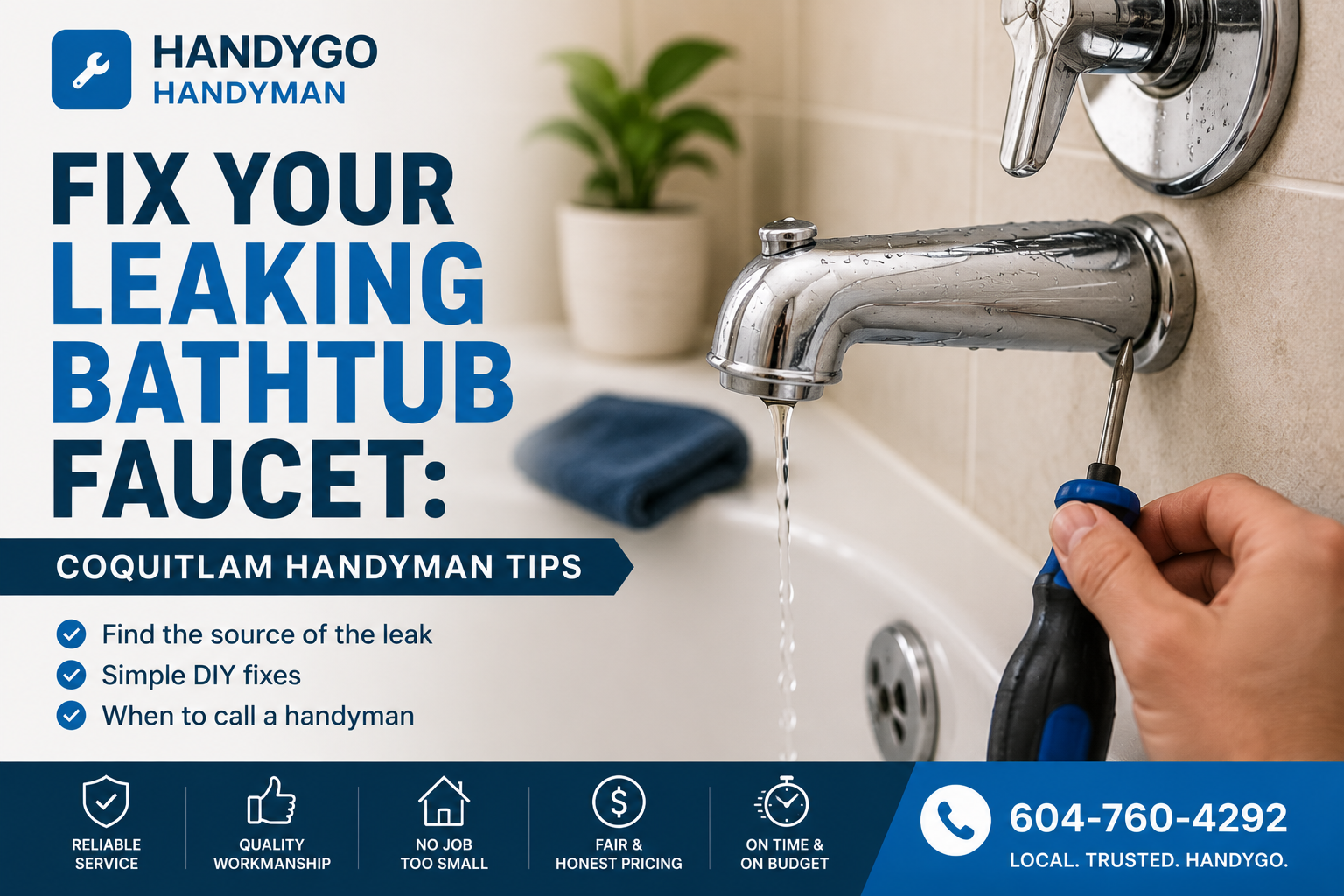
Fix Your Leaking Bathtub Faucet: Coquitlam Handyman Tips
Is your bathtub faucet leaking, causing frustration and wasted water? Discover expert tips from a Coquitlam handyman to fix it easily and efficiently!
Understanding the Common Causes of Faucet Leaks
One of the primary reasons for a leaking bathtub faucet is worn-out washers. Over time, the constant pressure and friction can cause these small components to deteriorate, leading to drips. When the washer no longer forms a tight seal, water can seep through, resulting in that annoying drip-drip sound. Regular maintenance and timely replacement of washers can significantly reduce the chances of leaks.
Another common cause is damaged or corroded valve seats. The valve seat connects the faucet to the spout and is crucial in preventing leaks. Hard water deposits can corrode the valve seat, compromising its effectiveness. Regular cleaning and using water softeners can help in maintaining the integrity of the valve seat and prolong its lifespan.
Mineral buildup is another culprit behind leaking faucets. Hard water contains minerals like calcium and magnesium, which can accumulate over time, affecting the faucet’s operation. This buildup can obstruct the flow of water and cause leaks. Using descaling agents and installing water softeners can help mitigate this issue and ensure smooth functioning of your faucet.
Tools and Materials Needed for Repair
To effectively repair a leaking bathtub faucet, having the right tools and materials is essential. A basic toolkit will generally include a set of screwdrivers, pliers, an adjustable wrench, and a utility knife. These tools will help you disassemble the faucet and access the internal components that may need repair or replacement.
In addition to tools, you’ll need specific materials such as replacement washers, O-rings, and valve seats. These components can be purchased at most hardware stores. It’s crucial to know the exact size and type of these parts to ensure a proper fit. Keeping a few spare parts handy can save you from multiple trips to the store and expedite the repair process.
Plumber’s tape, also known as Teflon tape, is another essential material. This tape is used to seal pipe threads to prevent leaks. Applying a few wraps of plumber’s tape on the threads before reassembling the faucet can provide an additional layer of protection against leaks. Additionally, having some cleaning supplies like a brush and vinegar can help in removing mineral deposits and ensuring a smooth repair process.
Step-by-Step Guide to Fixing a Leaking Bathtub Faucet
Before starting any repair work, the first step is to shut off the water supply to the bathtub. This can usually be done by turning off the main water valve located near the water meter. Once the water supply is turned off, open the faucet to drain any remaining water in the pipes. This will prevent any water from spilling out during the repair process.
Next, remove the faucet handle. Use a screwdriver to remove the screw holding the handle in place. Once the screw is removed, gently pull the handle off. If the handle is stuck, you can use a handle puller or a pair of pliers to carefully remove it. Be cautious not to apply too much force to avoid damaging the handle or surrounding components.
After removing the handle, you’ll have access to the internal components of the faucet. Use an adjustable wrench to remove the packing nut. Once the packing nut is removed, you can pull out the stem. Inspect the stem for any signs of damage or wear. If the stem is damaged, it will need to be replaced. If it’s in good condition, proceed to inspect the washer and O-ring. Replace any worn-out washers or O-rings with new ones of the same size and type. Reassemble the faucet by reversing the steps and turn on the water supply to check for any leaks.
How to Identify the Type of Faucet You Have
Identifying the type of faucet you have is crucial for selecting the right replacement parts and ensuring a successful repair. There are several types of faucets commonly used in bathtubs, including compression, ball, cartridge, and ceramic disc faucets. Each type has a unique mechanism and requires specific parts for repair.
Compression faucets are the most traditional type and are characterized by separate hot and cold handles. These faucets use rubber washers to control the flow of water. Over time, these washers can wear out and cause leaks. If you have a compression faucet, you’ll need to replace the washers to fix the leak.
Ball faucets are identified by their single handle that moves in a spherical motion. These faucets have a ball mechanism inside that controls the flow of water. Leaks in ball faucets are often caused by worn-out seals or springs. Replacing these components can resolve the issue.
Cartridge faucets can have either a single handle or separate handles for hot and cold water. These faucets use a cartridge to control the flow of water. Leaks in cartridge faucets are usually due to a faulty cartridge. Replacing the cartridge can fix the leak.
Ceramic disc faucets are the most modern type and are known for their durability. These faucets use a pair of ceramic discs to control the flow of water. Leaks in ceramic disc faucets are rare but can occur if the discs are damaged. Replacing the damaged discs can fix the leak.
When to Replace vs. Repair Your Faucet
Deciding whether to replace or repair your faucet can depend on several factors, including the age of the faucet, the extent of the damage, and the cost of replacement parts. If your faucet is relatively new and the issue is minor, such as a worn-out washer or O-ring, a repair is usually the best option. Replacing these small components can extend the life of your faucet and save you money.
However, if your faucet is old and has multiple issues, it may be more cost-effective to replace it. Older faucets are more prone to wear and tear and may require frequent repairs. Additionally, finding replacement parts for older models can be challenging. In such cases, investing in a new faucet can provide a long-term solution and offer improved functionality.
Another factor to consider is the cost of replacement parts compared to the cost of a new faucet. If the cost of the parts needed for repair is close to or exceeds the cost of a new faucet, replacing the faucet may be a more economical choice. Modern faucets also come with advanced features and improved water efficiency, which can be beneficial in the long run.
Preventative Measures to Avoid Future Leaks
Taking preventative measures can help avoid future leaks and extend the lifespan of your bathtub faucet. Regular maintenance is key to preventing leaks. Inspect your faucet periodically for any signs of wear or damage. Replace worn-out washers, O-rings, and other components as needed to ensure a tight seal and prevent leaks.
Another important measure is to avoid over-tightening the faucet handles. Over-tightening can cause excessive wear on the internal components and lead to leaks. Turn off the faucet handles gently to avoid putting unnecessary strain on the washers and O-rings.
Using water softeners can also help prevent leaks caused by mineral buildup. Hard water contains minerals that can accumulate inside the faucet and cause corrosion and leaks. Installing a water softener can reduce the mineral content in the water and prevent buildup. Regularly cleaning the faucet with vinegar or a descaling agent can also help remove any mineral deposits and keep the faucet functioning smoothly.
Hiring a Professional Handyman in Coquitlam
While some faucet repairs can be done as DIY projects, there are times when hiring a professional handyman is the best option. A professional handyman has the expertise and tools to diagnose and fix complex issues that may not be apparent to a homeowner. Additionally, hiring a professional ensures that the repair is done correctly and safely.
When hiring a handyman in Coquitlam, look for someone with experience and positive reviews. Ask for recommendations from friends or family, or search online for local handyman services. Check their credentials and make sure they are licensed and insured. This will protect you in case of any accidents or damages during the repair process.
Discuss the scope of the work and get a written estimate before starting the repair. A professional handyman will provide a detailed estimate that includes the cost of labor and materials. This will help you budget for the repair and avoid any unexpected expenses. Hiring a reputable handyman can give you peace of mind and ensure that your faucet is fixed efficiently.
Cost Estimates for Faucet Repairs in Coquitlam
The cost of faucet repairs in Coquitlam can vary depending on the extent of the damage and the type of faucet. On average, homeowners can expect to pay between $150 and $300 for professional faucet repair services. This cost includes labor and materials. However, the actual cost can be higher or lower depending on the specific circumstances.
For minor repairs such as replacing washers or O-rings, the cost is usually on the lower end of the spectrum. These repairs are relatively simple and require minimal time and materials. However, for more complex repairs such as replacing the valve seat or cartridge, the cost can be higher. These repairs require more time and specialized parts, which can increase the overall cost.
If your faucet needs to be replaced, the cost will be higher. The price of a new faucet can range from $50 to $300 or more, depending on the brand and features. Additionally, the cost of labor for installing a new faucet can add to the overall expense. It’s important to get multiple quotes from different handyman services to compare prices and find the best deal.
Frequently Asked Questions About Faucet Leaks
One common question homeowners have is, “How do I know if my faucet needs to be repaired or replaced?” The answer depends on the age of the faucet and the extent of the damage. If the faucet is relatively new and the issue is minor, a repair is usually sufficient. However, if the faucet is old and has multiple issues, replacing it may be more cost-effective.
Another frequently asked question is, “Can I fix a leaking faucet myself?” While some repairs can be done as DIY projects, it’s important to have the right tools and knowledge. For simple issues such as replacing washers or O-rings, a DIY repair can be done with basic tools. However, for more complex issues, hiring a professional handyman is recommended to ensure the repair is done correctly.
Homeowners also often ask, “What can I do to prevent future leaks?” Regular maintenance is key to preventing leaks. Inspect your faucet periodically for any signs of wear or damage and replace worn-out components as needed. Avoid over-tightening the faucet handles and use water softeners to prevent mineral buildup. Regularly cleaning the faucet with vinegar or a descaling agent can also help prevent leaks.
Conclusion and Final Tips for Homeowners
Fixing a leaking bathtub faucet doesn’t have to be a daunting task. By understanding the common causes of leaks, having the right tools and materials, and following a step-by-step repair guide, you can tackle minor repairs on your own. Identifying the type of faucet you have and knowing when to repair or replace it can also help you make informed decisions and save money in the long run.
Taking preventative measures such as regular maintenance, avoiding over-tightening handles, and using water softeners can help prevent future leaks and extend the lifespan of your faucet. However, for more complex issues or if you’re unsure about the repair process, hiring a professional handyman in Coquitlam is a wise choice. A professional can provide expert diagnosis and repair, ensuring your faucet is fixed efficiently and safely.
By addressing faucet leaks promptly and taking preventative measures, you can avoid the frustration and wasted water caused by a leaking faucet. With the right knowledge and tools, you can keep your bathtub faucet in good working condition and enjoy a leak-free bathroom.
